
In 1954, running a mile in under four minutes was widely believed to be out of reach for the human body.
Roger Bannister ran it anyway, and forty-six days later John Landy did it too.
The human body didn’t change in those 46 days. What changed was the belief about what it could do.
Last week I sat in an EO session with about 45 entrepreneurs, led by Professor Bala, and the first instruction he gave the room was to draw your own face so he could show it to everyone.
A few people never put pen to paper. They hadn’t tried and failed. They had simply decided, long before that morning, that they couldn’t draw.
Seven minutes later, after following a short sequence on screen, every single person in the room had drawn four cartoon characters.
Here’s mine.
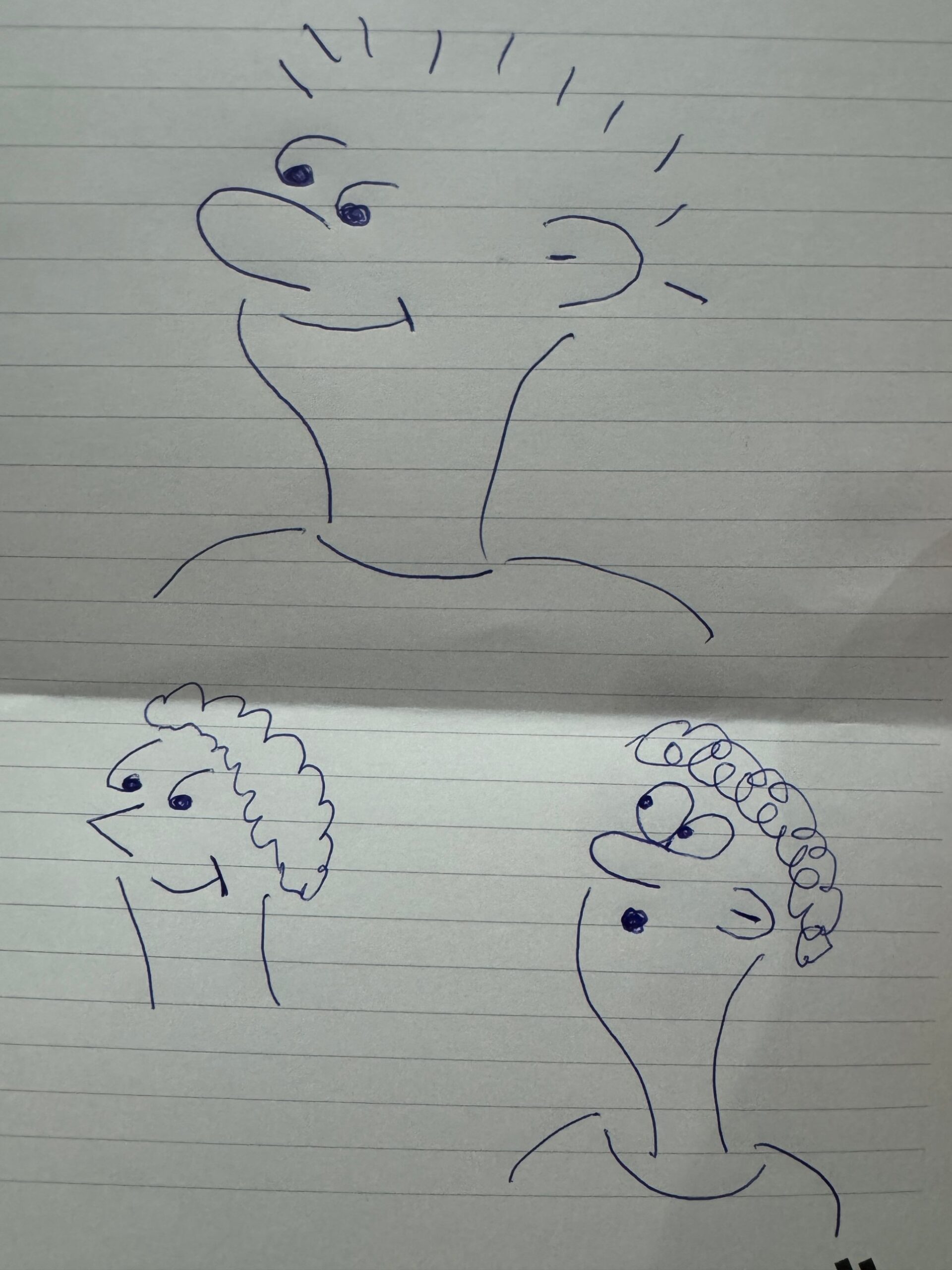
I wouldn’t hang it in a gallery, but I also wouldn’t have believed I could produce it before I sat down.
Most limits aren’t limits. They’re beliefs nobody ever bothered to test.
He put a number on where those beliefs come from: roughly 25,000 hours of conditioning by the time you turn 18, from parents, teachers, early failures and offhand comments from people you trusted.
Some of that conditioning serves you well, and some of it quietly runs your life without asking permission.
Beliefs work as filters. Every decision you make passes through them, and because you never see them working, you assume the decision was yours.
You don’t consciously decide “I can’t draw.” You just never pick up the pen, and the belief gets to stay intact for another forty years.
Three beliefs got exposed in that room over a single morning.
1. “I can’t do that.”
That was the drawing exercise. Most of your untapped range sits in the gap between “I can’t” and “nobody ever showed me how.”
2. “I’m good at multitasking.”
He had us write “multitasking is a lie” with a number under each letter, alternating letter and number, and then write it again with the full sentence first and the numbers afterwards.
The output was identical both times, but the alternating version took roughly double the time and came with more stress and more mistakes, all because of thirty-five attention switches against one.
His image for it was a pressure cooker: attention is the flame, and every time your phone pings, you switch the flame off and then wonder why dinner is taking all day.
Multitasking isn’t a skill. It’s a tax you’ve stopped noticing you pay.
3. “Scrolling helps me relax.”
Relaxation means thinking less and thinking slower, while a reel changes every few seconds and keeps your brain working the entire time. That’s stimulation, not rest.
It’s why twenty minutes on your phone tends to leave you emptier than when you started.
He picked up a glass of water and shook it, and the point landed without much explanation: nothing stays in a glass that won’t stop moving.
Stabilise your mind to utilise your brain.
So this week, run three tests on yourself.
First, keep the first ten minutes of your workday screen-free. Use pen and paper to list the work, prioritise it, and slot each piece into an uninterrupted block.
Second, pick one important task, put your phone in another room, and time how long it actually takes.
Third, write down five things that relax you without a screen. If you stall at two, that tells you something worth knowing.
Bannister didn’t get faster than the human body allowed. He got faster than the belief allowed.
Which belief are you still running without ever having tested it?
Here’s Some Inner Game Wisdom to Chew on This Week
1 question from me
Which belief about yourself have you defended for years without ever once testing it?
2 questions (and answers from me)
Q: How do I find a belief I can’t see?
A: Look at what you never attempt. The things you avoid without ever having tried are where untested beliefs live, so write down every “I’m not the kind of person who” and test the cheapest one this week.
Q: What if my phone genuinely relaxes me?
A: Check how you feel twenty minutes later, not two. If you come back emptier than you went in, it was stimulation, and a walk or a book would have given you more.
3 insights
- Most limits are untested beliefs.
You rarely fail at the things you believe you can’t do. You just never start them. - Attention is the flame.
Every switch takes heat out of the work, which is why the same task can take twice as long as it should. - A screen is never rest.
If it changes every few seconds, your brain is working, whatever you choose to call it.
Get the 1-2-3 Inner Game every Tuesday
One email a week. Five minutes. One question, two answers, three insights.
Until next week:
Pick up the pen.
Test one belief.
Dhiren
0 Comments